

What’s a Basecamp?
It’s a gathering place for curious people, adventurers, and explorers.
Every adventure needs a basecamp.
A place to pause, exchange ideas, gather inspiration, and prepare for whatever comes next.
Curious Basecamp is that place.
It’s for people who believe there is always more to discover, more to learn, and more of life worth exploring.
You don’t need to know exactly where you’re going.
Bring your curiosity.
We’ll start from there.
Curiosity is the mindset. Adventure is curiosity put into motion.
Being an adventurer isn’t defined by how far you travel, how high you climb, or how daring the undertaking appears.
It begins with curiosity. With noticing something and wondering, What’s out there? What might happen if I tried? What could I learn if I went?
An adventurer is simply someone who is willing to go find out.
Sometimes adventure means traveling thousands of miles. Sometimes it means taking an unfamiliar road, learning something new, meeting someone different, changing your mind, or beginning something without knowing exactly where it will lead.
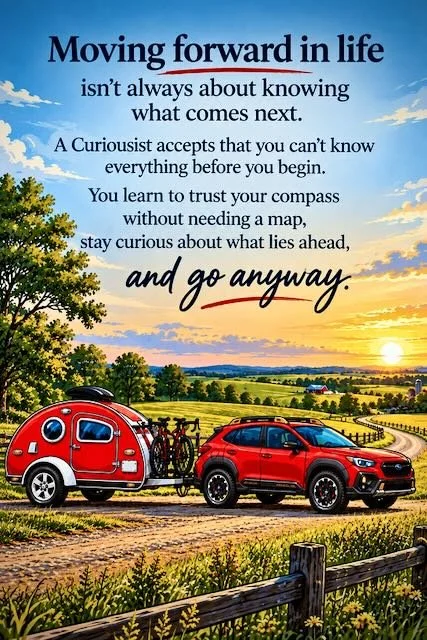
You don’t need all the answers before you begin. You don’t need a perfectly drawn map. You need enough curiosity to point the compass and enough willingness to follow it.
Adventure isn’t about escaping your life. It’s a way of engaging more fully with it.
Stay curious. Pay attention. Be willing to change direction. Leave room for the unexpected. Go somewhere you haven’t been, physically or otherwise.
Curiosity points the compass. Adventure follows it.
And sometimes the most important thing you can do is simply go find out.
“Your age is a fact.
Your mindset is a choice.
Choose to be curious, creative, and boldly alive.”
What Does It Mean to Be Curious?
To be curious is to refuse to let familiarity have the final word.
It’s looking at something you’ve seen a hundred times and wondering what you’ve missed. It’s meeting someone and leaving room for them to surprise you. It’s questioning an old belief—even one you’re comfortable with.
Curiosity asks: What else might be here?
We get used to our lives. We travel the same roads, talk to the same people, and settle into familiar ways of thinking. Eventually, we can mistake familiarity for understanding.
I’ve seen that.'
I know how that works.
That’s not for me.
Each statement can close a door before we’ve looked through it. Being curious means pausing long enough to ask: Do I know that, or have I simply stopped asking? You don’t have to find everything fascinating. You can begin by giving something a second look. Ask another question. Follow an interest a little further than you normally would.
Take a different turn on a familiar walk. Ask someone how they came to see the world the way they do. Try something you’ve already decided you’re no good at—and notice what happens when you give yourself permission to learn.
There’s a creative possibility in that willingness. An unfamiliar idea meets something you already know. A conversation gives you a new perspective. A small discovery becomes the beginning of something you couldn’t have planned.
Curiosity also asks us to loosen our grip on who we think we are.
What might I enjoy that I haven’t tried?
What have I dismissed too quickly?
What am I still capable of discovering about myself?
Those questions leave room to grow.
Being curious means accepting that your experience of the world is still incomplete—and participating in what comes next. You can begin without knowing where an interest will lead. The next question may be enough to get you moving.
Today, choose one thing you would normally pass by. Give it your attention. Let yourself wonder.
What have you stopped wondering about because you think you already know?
Curiosity gives us a reason to take the next step before confidence arrives.
You don’t have to feel certain or capable right now, just curious enough to find out what’s possible.
Your comfort zone is where your dreams come to die.
The bigger your comfort zone, the smaller your life.
Big or small life? Which one are you curious about?
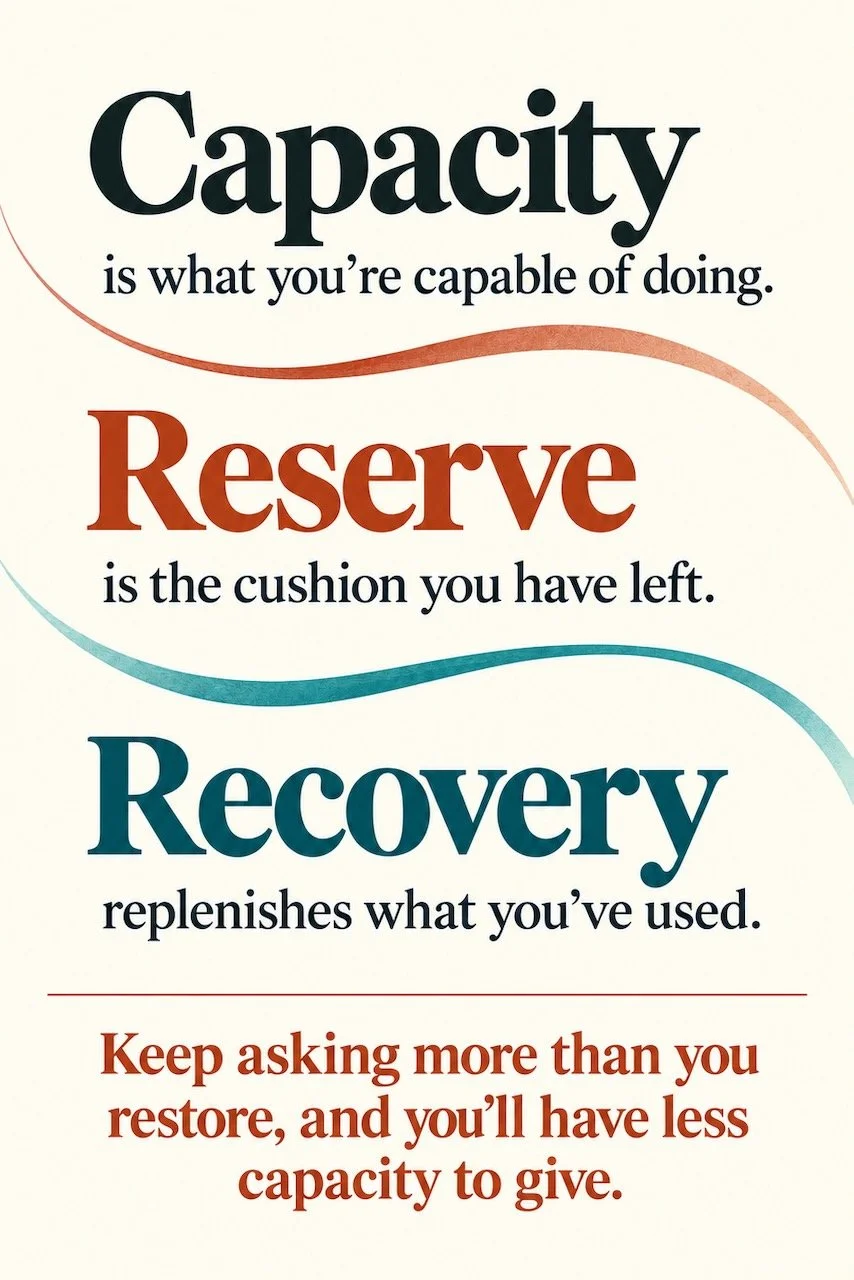
Physical fitness is not simply about what you can do today. It's about preserving your ability to choose what you want to do tomorrow.
Don't Exercise to Get Better at Exercising
I exercise to stay capable of living the life I choose.
I don't exercise to get better at exercising.
I exercise to increase my capacity to do what I want to do, when I want to do it.
I don't lift weights just to lift heavier weights. I lift weights so I can carry what needs carrying, climb what needs climbing, and handle the physical demands of everyday life.
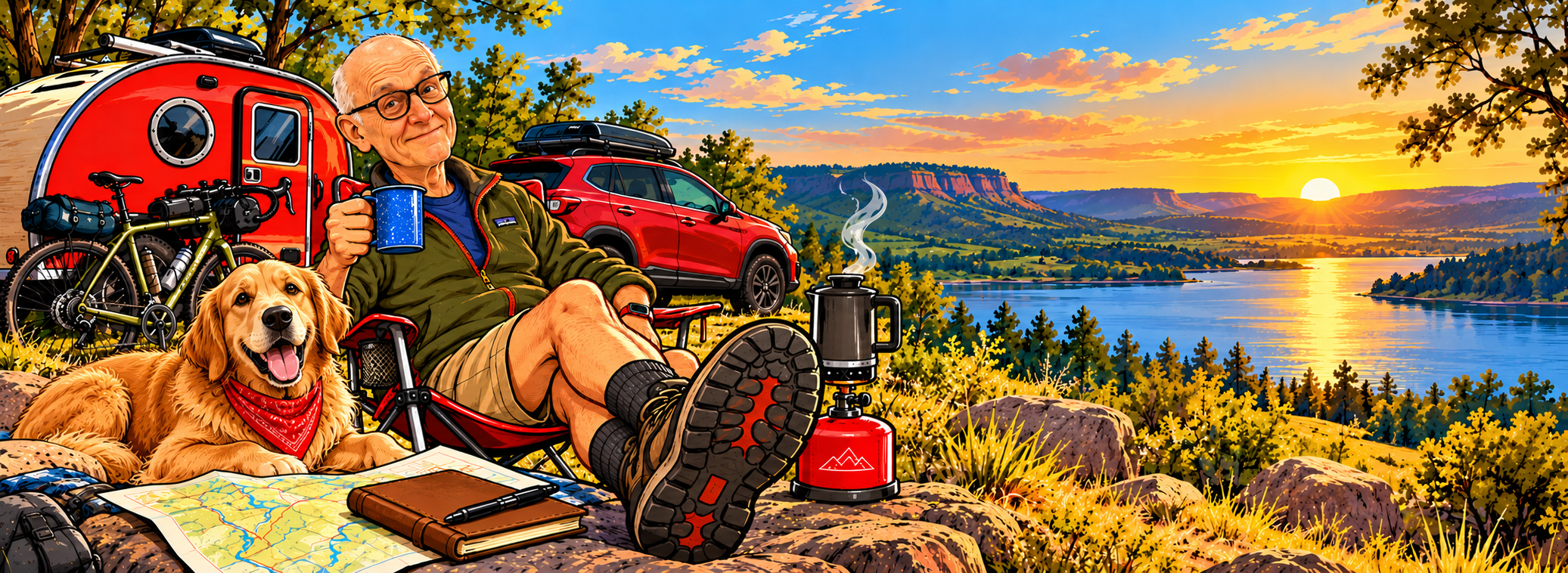
I don't ride my bicycle just to become a better cyclist. I ride to build the endurance that allows me to explore new places, travel farther, and say yes to adventures that interest me.
I don't practice balance and mobility just to perform exercises correctly. I practice because I want to move confidently, get down on the ground, get back up, and continue doing things for myself.
The real measure of fitness isn't what I can do during a workout. It's what my fitness allows me to do outside of it.
As I grow older, that distinction becomes increasingly important.
I'm not training to compete with the person I was 30 years ago. I'm building the capacity of the person I want to become.
Strength gives me options. Endurance gives me freedom. Balance gives me confidence. Mobility keeps possibilities within reach.
And together, they help preserve something I value enormously: my independence.
I recognize that my physical capacity will change as I age. But I don't intend to accelerate that decline by asking less and less of myself.
I want to keep challenging my body to adapt, improve, and remain capable.
Because ultimately, I don't want my lack of physical capacity to determine how I live my life.
I want my curiosity to determine where I go, my interests to determine what I pursue, and my physical capacity to help make those choices possible.
I don't exercise to become better at exercising. I exercise so I can remain free to choose what comes next.